
Talk & slide Presentation
by visiting German artists , Marlis Glaser and Samuel Fischer-Glaser (mother & son) on Sunday, May 15 at 3:00pm at the Deerfield Arts Bank, 3 Sugarloaf St., South Deerfield.
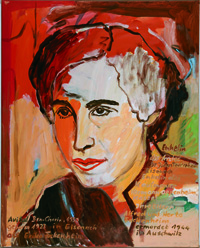
Marlis Glaser is a prolific painter who focuses on visual narratives based on actual interviews with her subjects. Her “Abraham Project“ which she will be sharing with us, is a collection of more than 180 portrait sketches and paintings which brings together biblical, historical and biographical content and elements from the history of art. The world of German-speaking survivors has been interpreted through 4 symbolic motifs: FACE, TREE, NAME and OBJECT. This exhibit has traveled to 22 venues in Germany, France since 2006 and in Israel, when it was dedicated to the 60th anniversary of the State of Israel and the 70th anniversary of Kristallnacht.
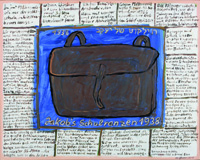
Glaser‘s paintings have been inspired by Hebrew illuminated manuscripts, the Jewish festivals, the verses of the German-Jewish poet Else Lasker-Schüler and the poetry of “The Song of Songs.” All of these are intimately connected, as well, to Glaser‘s series of paintings “Trees in Jerusalem.”
Marlis Glaser (www.marlis-glaser.de) studied at Academies of Art in Bremen & Hamburg and has exhibited in Germany, the Netherlands, Sweden, France, Israel and Denmark.
Her projects have included (1978-89) wall installations:
– The History of the Labor Movement
– The History of the Women’s Liberation Movement
– Women of the French Revolution
– Portraits of Women of the Resistance, World War II
The Legacy of Janusz Korczak and his Orphans (2002-04), a project undertaken with schoolchildren
—and—
Samuel Fischer-Glaser has studied sculpture at the Academy of Fine Arts in Munich since 2012. His unique point of view is filled with biblical and literary references (e.g. Franz Kafka’s The Castle, Goethe’s 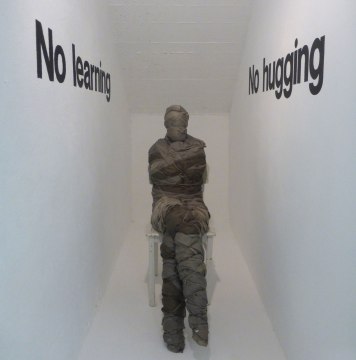 poem, Erlkönig (Elf King), King Belshazzar from the Book of Daniel, or a 1940 song from the Krakow ghetto by Mordechai Gebirtig)
In his drawings, collages, fabric sculptures and installations, he explores psychological and moral aspects of characters and their behaviors, confronting the viewer with his own shadow self. The works show the close connection between religion, psychology, literature and language.
He has participated in numerous European exhibitions. (Including the European Day of Jewish Culture in Attenweiler.)
See www.sfischerglaser.de/index.php/en
A reception follows the presentation.
The public is invited.
More info: Jane Trigère (413)-768-8917
or Ken Schoen ken@schoenbooks.com
To Hear One’s Voice
Ken and I spent the morning sharing readings and ideas.
He cut out an article to read about an Australian woman writing about her grandmother who was a refugee from wartime Europe in 1939… and of being the guardian of her grandmother’s jewelry and archives. Burglars got the jewelry. The archives remain.
I too have archives and artifacts that I am responsible for. I am struck with the dilemma of being the hinge generation. In her case, the generation that experienced the Holocaust are nearly gone. This woman in the article has inherited an imperative to represent this past, to prevent this history from crystallizing into myth. How does one do that?
I think, oddly, about how making bread or a holiday recipe is a way to connect with family history. My mother taught me to do this in such a manner and her mother taught her, etc. Also, at the Passover Seder we tell the story of the Exodus from Egypt and we say “our fathers told us this.” And, of course, their fathers told them, etc.
I then read to Ken a passage from a book I was reading about the power of liminal moments. These threshold moments are soul moments, the author says. I think he means that they are crucial to who we become. The door opens; the door closes; the hinge is both here and there and in neither place. It facilitates that threshold moment. Isn’t that we we are talking about?
And suddenly, out of nowhere, a phrase comes to mind: “C’est ridicule.”
This was my father’s judgmental catch phrase. Sometimes it was aimed outwards at life’s clearly silly, ridiculous events. But sometimes it was aimed at me.
Ken and I went on talking and sharing ideas. They flowed off my tongue. I felt the ease with which they formed themselves into cogent sentences as I heard myself speak. Why, I even inspired myself! Then I knew what he would say: “Go write these thoughts down. Take a moment.”
But, I knew I could not. I explained that speaking rather than writing brings out something…like the creative tension of being onstage and having to produce sound in a composed and persuasive manner. The instant, the very moment of reacting with words, to whatever is being said, read or presented, is potent… and then lost.
I added that there are two levels I can discern.
One, is to have an insight and to think: “Wow, that was really sharp, interesting, and even useful.”
And, two, which I hesitate to share with anyone, is that there is a secret place in me that wishes for a larger audience–perhaps to be able to help others with my experience and insights… or less humbly, to be known as someone with certain …je ne s’ais quoi… wisdom?
Ah ha, this must be where “C’est ridicule” comes in.
I can’t seem to get from the deep, interesting conversation to placing those same ideas on paper. Why is that threshold, that liminal moment so hard to cross? Enforced modesty or humility has its price. Don’t be ridiculous, Jane. “They all know better, are smarter, are well-known…who are you to speak at all?” This old message took it’s toll. Way back in high school, in college and even later, my knees would visibly, and even audibly shake as I waited my turn to ask a question in public. Time and repeated experience let me observe that my questions were valued, useful, even hoped for.
But, here I am unable to recreate on paper what flowed from my brain to my lips just an hour ago.
I know, it’s enough that I had the thought. The thinking of the thought is enough, isn’t it? Ken heard me, and importantly, I heard me. Speaking aloud is so definitive. Thinking can be so amorphous. Forming words, forming sentences… syntax has a force that is underestimated by everyone. But when I speak, I can see whether my words have reached their mark, have changed a mind, have struck a note. Who even thinks about what I just wrote?
And now, the years have collected and I sense how my words need space on paper to be recorded and read later. We all are the hinge generation. Only we can transmit what we “know” or have heard from earlier generations. If I have something to share, it will have to be on paper, because my time is… well, not timeless. I had forgotten. No, I had never even thought of that. I will not hear my voice in future years—not the actual voice. It will be someone else’s voice I do not hear. It will be in the voice of the reader. And there is a strange, strange thought.
I will have to write about it, of course.
Face to Face with the Image of God
Everyday, Hanna needed to go out into the world and encounter some people… any random people. It did not much matter who. The possibility for interactions, for dialogues, for giving joy, or praise, or even advice… well, if there was such a thing as a pregnant pause, then surely there could be expectant possibilities. These were all that is needed… that, and a little bit of boldness.
Hanna had reached an age when she could get away with things–things she could not do as a younger woman. In her 60s, she could directly, abruptly, amusingly speak to a random couple on the street, at the market, or leaving a movie theater. In her 30s, 40s, maybe even 50s there was this… what shall we call it… some psycho-socio-sexual something-or-other that would prevent her from doing exactly the same thing. Freedom. She had freedom to act freely. On the other hand, she was able to imagine that there might be an upper limit to this privilege. As a 90-year-old, she might elicit a dismissive reaction: “Oh gosh, here comes that old nut! Let’s get away. She tells the same old story every time we meet her!”
But if that were the case–if she’d become dotty–then she probably wouldn’t mind or even notice. She’d chirp, “Every day, I meet the nicest people,” …over, and over again.
Find more people to smile and laugh with. That was Hanna’s goal. This is what fed her, gave her hope and strength and kept her resilient and happy. She had finally learned to take care of herself, and how to properly do so. She was no longer fitting herself into the busy schedules of everyone around her. It was okay to not get her “to do” list done. Okay, to go lie down and rest; okay, to nap today–and yesterday. The possibility of gleaning some joy, an insight, yet remained.
Tonight, Hanna might dream; she might recall the dream; and perhaps that dream will help her resolve some anxiety, some unfinished worry… but tomorrow, in the bright new day, she will engage life again, and find more random people to meet face to face. If we are made in God’s image and God’s presence is manifest in the face of the other, she cannot be too selective. That presence must be in an anxious face just as much as in laughing eyes.
Last week, she noticed how big her grandson’s feet had become. “Wow, looks like my shoes might fit you!” she declared. So he tried them on. “I feel like I am wearing Omi’s shoes,” he said, bemused. Hanna wasn’t sure if that was a good, or bad, or neutral statement from an 11-year old. Maybe a bit of each.
Then she remembered the day before her wedding, feeling that she was walking her mother’s shoes. As she crossed a parking lot she heard the clop clop of her mother’s high heel shoes. She felt that she was inhabiting her mother’s actual shape. So she said out loud, but quietly: “Hello Mother. Thanks for being here with me today. I wished you could be here… and so you are.” She did not often think of her mother, nor wish her presence, but as she grew older into the freedom to act free stage of life, her mother came to mind more often. In fact, since she reached 63, the age of her mother’s death, she often thought things like: “She would have been interested in this or that development,” or “Who would Mother have voted for in this election?” or “Would she have mellowed and been easier to be with at this age?” and, perhaps, most wistfully: “I wish you were around, Mother; I’d like to talk to you about something.”
Hanna’s mother was a bold woman. Bright, brave, witty, beautiful, but something was not right. Too many quarrels, too many directions, too many husbands, too much alcohol. Not a happy person. It took Hanna many years to appreciate her mother, to understand her, to admire her, and to feel compassion for her. A wonderfully stranger idea came to her. “Wow, the person I have become could easily have been a good friend to her, encouraged her. I could have made her laugh.”
And with that, to herself, Hanna laughed.
Sketching Portraits with Words
It was a wild success!
18 people came to write. Jane Roy Brown asked us to focus on one portrait in the gallery and first to simply describe what we saw, then to amplify with what what we felt or imagined. And then we had to pick another portrait in the gallery and create a dialogue between our two candidates. Several writers volunteered to read what they had written. It was astounding. The room came alive around us with “real feeling” personalities.
Sketching Portraits with WORDS
Sunday, January 10 (12-2pm)
FREE
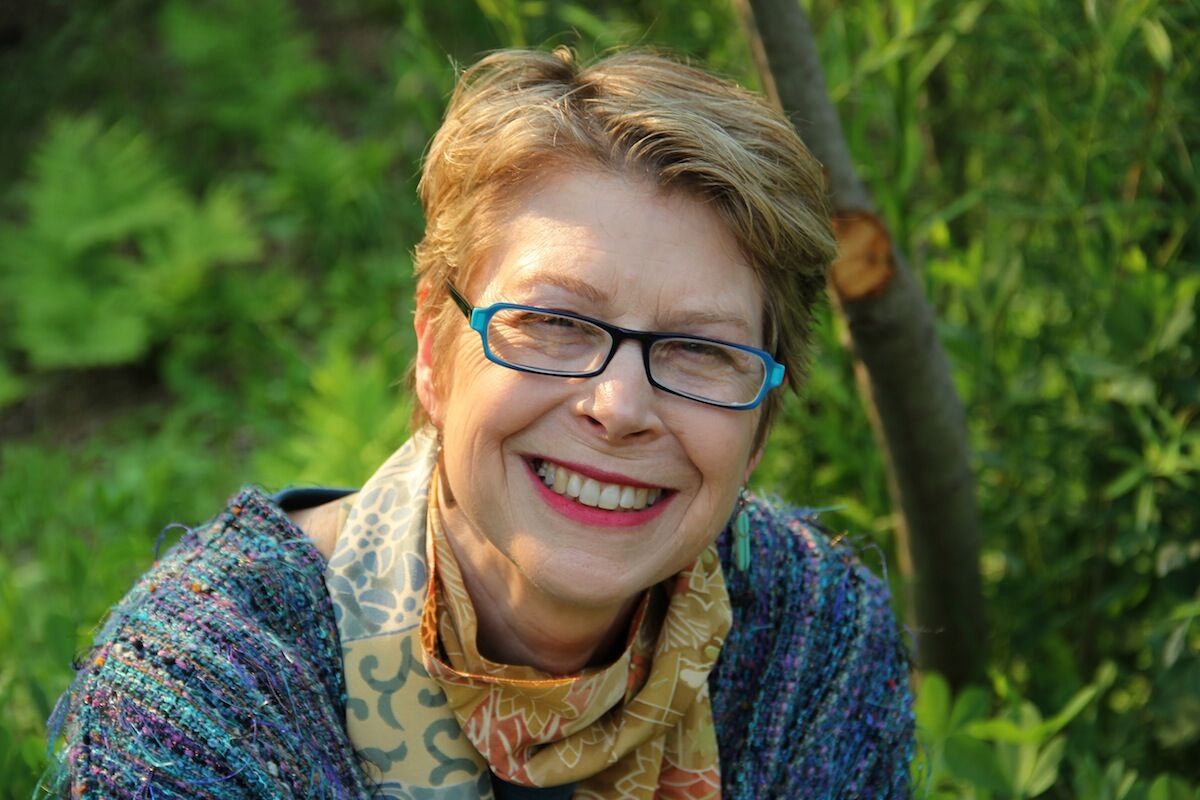
with author and writing coach
Jane Roy Brown
Hanukkah Party
The 5th Night of Hanukkah
Everyone is invited!
6:30pm on Thursday, Dec 10
a community together celebrating simple pleasures and historic events
Singing and playing dreidel, too
Sketch Session NEW Pictures
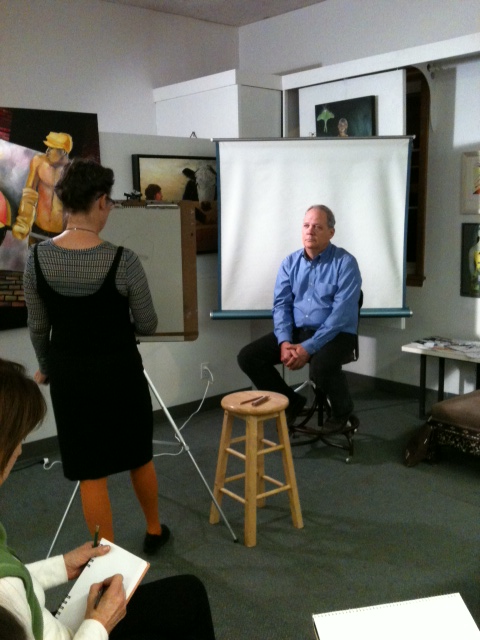
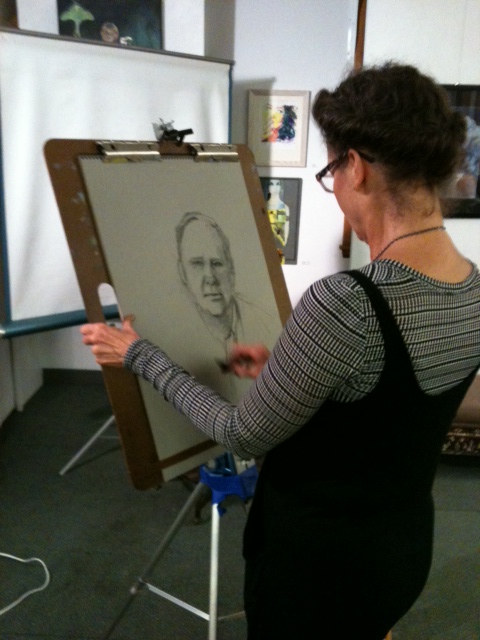
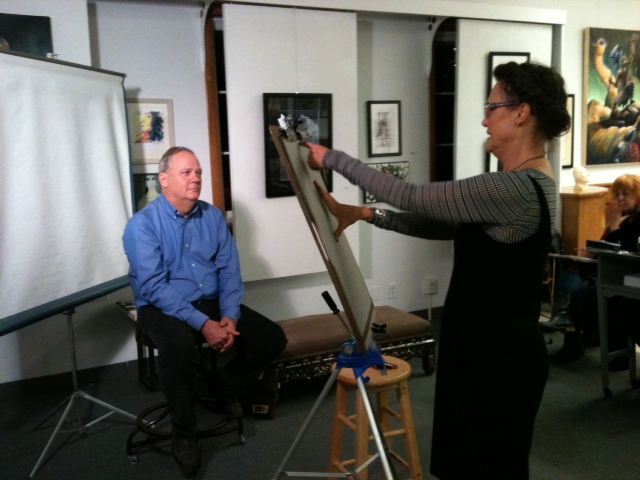


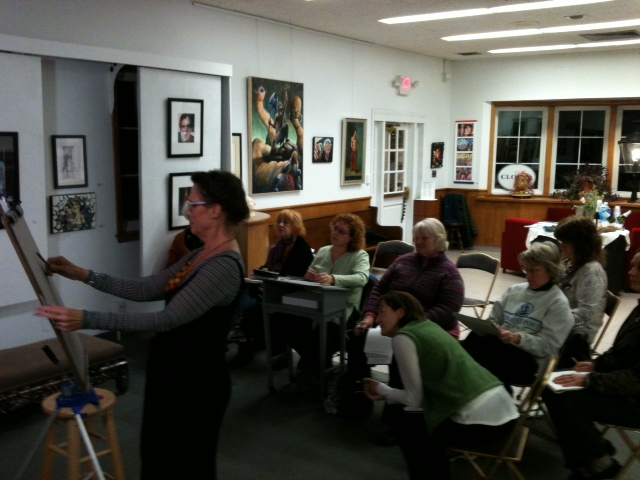

Thursday, December 3, 6-8 pm
What are we saying about ourselves in a self-portrait?
When we paint a portrait, what are we trying to reveal about the subject and what is concealed?
The work of 40 local artists demonstrates this puzzle.


Artist Elizabeth Stone will draw a charcoal portrait from a live model Thursday, December 3
Come watch or sketch along.
Sketchers may ask for hints about how to improve their drawings at the break.
Bring a sketchbook and simple materials (pencil, pen, charcoal, eraser).
These 2 paintings are Elizabeth Stone’s contributions to the current Portraits exhibit
Fixing Everything
I am always fixing things.
Prying open something with a screwdriver; applying glue; oh that reminds me the veneer on the leg of the dining room table needs glue. Quick before it falls off. The vacuum cleaner must have banged it.
Shopping bags—paper and plastic—are dropped and forgotten. Inside are the materials necessary to fix something. Who remembers? Is this me in my dotty old age? Surrounded by bags full of unfulfilled projects!
Would I recall what project was intended if I peered into one of these bags? Or conversely, if I resolved to finish a particular project can I find the bag with the needed materials?
Ha’azinu, 2015
On this Shabbat directly after Yom Kippur, I would like to loosely weave together three themes that have touched me during these recent holidays. I hope you will see the link. And… the culmination is today, with the death of Moses.
On Yom Kippur we read from the Torah (Leviticus 16) about the role of the High Priest. About the 2 goats and the sacrifices and about what happens in the Holy of Holies once a year.
The High Priest will bathe and wear a tunic with breeches, sash and turban – all in white linen. He will go alone behind the parochet, the curtain.
There, in the Holy of Holies are the Stone Tablets that God gave Moses. They are in the gold-plated wooden chest—the Ark of the Covenant
But lest he die from such a sight, from such proximity, the High Priest will throw incense on God’s fire – and cloud his own view. What is it that he should not see? The kaporet, the cover of the golden chest? Kaporet? Why is this like kapara, or kippur. What does the root Kaf, Peh, Resh mean?
Rashi explains kaparah as wiping out
Ibn Ezra as hiding, covering
Rambam as ransom for a soul; atonement
Kippur is often translated as Atonement and Kapara as Sacrifice
The text says: “He shall then slaughter the people’s goat of sin offering, bring its blood behind the Parochet/curtain, and do with its blood as he has done with the blood of the bull: he shall sprinkle it over the Kaporet/cover and in front of the Kaporet/cover.”
Kaporet (Kaf, Pey, Resh & Tav) ……..Parochet (Pey, Resh, Khaf, Tav)
Same letters; different order.
Behind the Parochet is the Kaporet
I understand that something terribly important happens between the two—
between Parochet and Kaporet:
But what?
It is a permutation of letters, but a reversal that is transformational…that is, in fact, redemptive.
__________________________________________________________________________
The second theme is the 2 goats
One is sacrificed by the High Priest as a sin offering.
The other goat, the scapegoat, is burdened with all the sins of the people and sent off to make expiation into the wilderness, to Azazel (whatever that is. Our Rabbi spent time on Yom Kippur exploring this in his sermon).
Rituals are powerful. Perhaps the ritual of the scapegoat inspires Jews to repent because it symbolizes that we can divest ourselves of past sins. The goat is left standing alive but sent off to possible or probable death… but we will not witness its death in the wilderness.
And, so in this week’s parshah … I imagine Moses… standing… high up on the peak—that is, on Pisgah. Is he perhaps the 2nd goat and is he also the High Priest pouring out the past and future sins of the people? His poem or song describes what will happen to us when (not if) we betray God.
It’s a history lesson—a harangue—an accusation—a warning—a witnessing …and a promise of God’s redemption. He speaks about God …and for God.
The last line (verse 43): ve’khiper admato amo translated variously as:
God will “cleanse the people’s land.”
or “appease His land & His people.”
But admato may be a scribal error for u’dmaot
Meaning, therefore, He will “wipe away His people’s tears” (not land).
Cleanse, appease and wipe …are all used for the word= khipper…which we know as atone or sacrifice.
Are the sins poured on our heads or has Moses taken them on like the goat? Is he somewhere between parochet and kaporet expiating our sins.
__________________________________________________________________________
And later, on that very day Moses dies somewhere in the wilderness…
Much has been made of why he is prevented from coming into the Land…But I see this moment in the story as a sacrifice—a not so willing one.
14 years ago I wrote this midrash:
(Moshe and God on Mt. Nevo: a Midrash on Deut. 34:4-6)
So, the day was ending, and Moshe climbed the narrow trail to the other face of Mt. Nevo. Earlier in the day, at Pisgah, God had shown him the entire Promised Land and all that would befall Israel in the future. He saw more than he cared to.
So his thoughts turned to the past. He thought of Avraham who also climbed a mountain…that time, to sacrifice his son Yitzhak at God’s command. But God intervened and substituted a ram. “Maybe God will ……” he half suggested raising his eyebrows as if in conversation… and one hand opened to express the possibility.
He thought of his own sons, and wondered if he could have withstood such a test. His throat tightened around a flood of memories…so many recent deaths…
As he continued his climb, his thoughts wandered over the years. He recalled protesting to God that he was “not a man of words…that he was heavy of mouth and speech.”
“But, I suppose I did alright these last 5 weeks… teaching the people…with God’s help, of course” he added quickly, for he remembered God answered him then rather impatiently:
“Who makes a mouth for man…Is it not I, Yod-Hey-Vuv-Hey. So now go! I shall be with your mouth and teach you what you should say.”
Oh yes, he remembered well, and everything. He had pleaded with God so often—but he knew that no plea would change God’s decision now. He was not going with his people across the River Jordan. He would die here. Certainly, it was not because he had no strength or no skill. …for he certainly had the ability to persuade… even God. But, not this time.
The evening sun stood sentinel. “I understand,” he said suddenly out loud, startling himself.
The Man of God stepped surely over stones and brush to reach the place — haMakom… the very place where God would meet him, as promised.
“Hineni. I am here.”
“Friend,” said the voice of God softly, “I, too, am here.”
Moshe knelt.
“You are my faithful servant,” pronounced God, raising Moshe’s already lofty status to that of Servant of God! A servant, after all, is permitted to enter the inner chamber of the king. Moshe would surely see now more than the afterglow of God’s passing presence.
Even kneeling Moshe was dignified.
God enveloped him and placed His mouth on Moshe’s mouth and reversed the act of creation. Yod-Hey-Vuv-Hey had breathed life into Adam’s mouth.
Now, He held His Godly breath and Moshe expired.
God carried Moshe’s body down to the valley and buried him Himself.
And that night, we are told, I-Am-That-I-Am was heard crying on Mt Nevo.
…
Well, a lot has happened to me, as you can imagine, in the last 14 years.
Which brings me to the next and last theme.
During these Holy Days we did a lot of remembering of our parents, our teachers. I thought about how hard it is to separate from them. To keep them close (in love and in hate) ….and to become separate—to become oneself.
I thought about the admonitions, criticism and other, shall I say, “poems” my father aimed at me and I wondered if I was any freer from perpetuating these “sins” than the Israelites were after hearing Moses tell them how they would fail repeatedly.
I thought about the role of parent/teacher—like Moses, like my father and now like me.
I am not sure that any of us know what we are doing with our warnings & predictions if not insuring that they will indeed happen.
But I do know that God loved Moses… and retired him from his job as father/leader/teacher in the only way possible. Moses died and there is no grave to visit, to mourn, to protest and cry at, or even fight over.
The Israelites had to make their own way with their own mistakes…just as I had to & just as our children must… in spite of who our parents were… but also because of who they were.
__________________________________________________________________________
The last few days have been filled with remembering: of sins, of sacrifices, of deaths and then… then atonement.
The Baal Shem Tov said that “remembering is the secret of redemption.”
As we come back to the mundane world from our own personal Pisgah experience…
…from the intensity of the mystery between Parochet & Kaporet…
…from our restoration through reversals & teshuvah…
…from cleansing and appeasing and wiping away tears…
…May we go forward guided by the memory of a courageous Moses and the Torah he taught. On his yahrzeit, may his memory be for a blessing.
This year, Moses will be the first guest in my Sukkah.
New art classes start soon -Register NOW!
Fantastic new classes start VERY soon:
Go to http://deerfieldartsbank.com/classes/ to sign up!
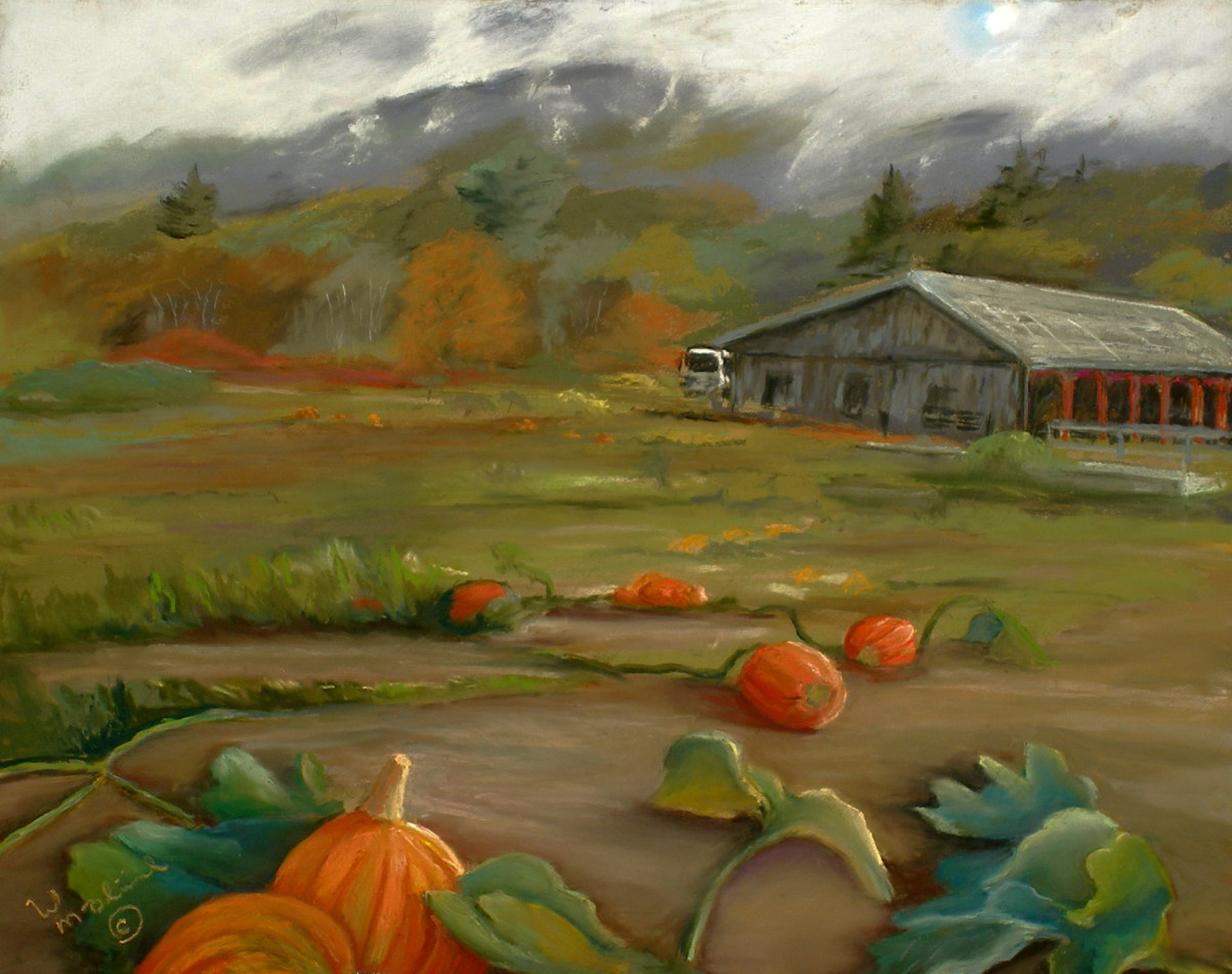 Pastels (March 8),
Bookmaking (March 10),
Embroidery (3/15),
3-D design/print (3/17 or 3/26),
Pysanky (3/22),
W atercolor (3/23),
Origami (3/24),
Jewelry (3/29),
Papercutting (3/31),
Calligraphy (4/12) &
Drawing (4/26),
Register: Papercut for kids Feb.1st
We are looking for a few more participants for this papercut workshop for kids.
Two hours on Sunday, February 1, 2015
 Papercut workshop for kids (8-14) with Greta Kessler
(one of the artists in the current Papercut Art exhibit)
Call 413-665-0123 to let us know you are coming.
Leave a message with phone and email contact please.
Pay $30 fee on Sunday

 Jane Trigere Art